The craft

Turning Wood into Wonder
Since Generations

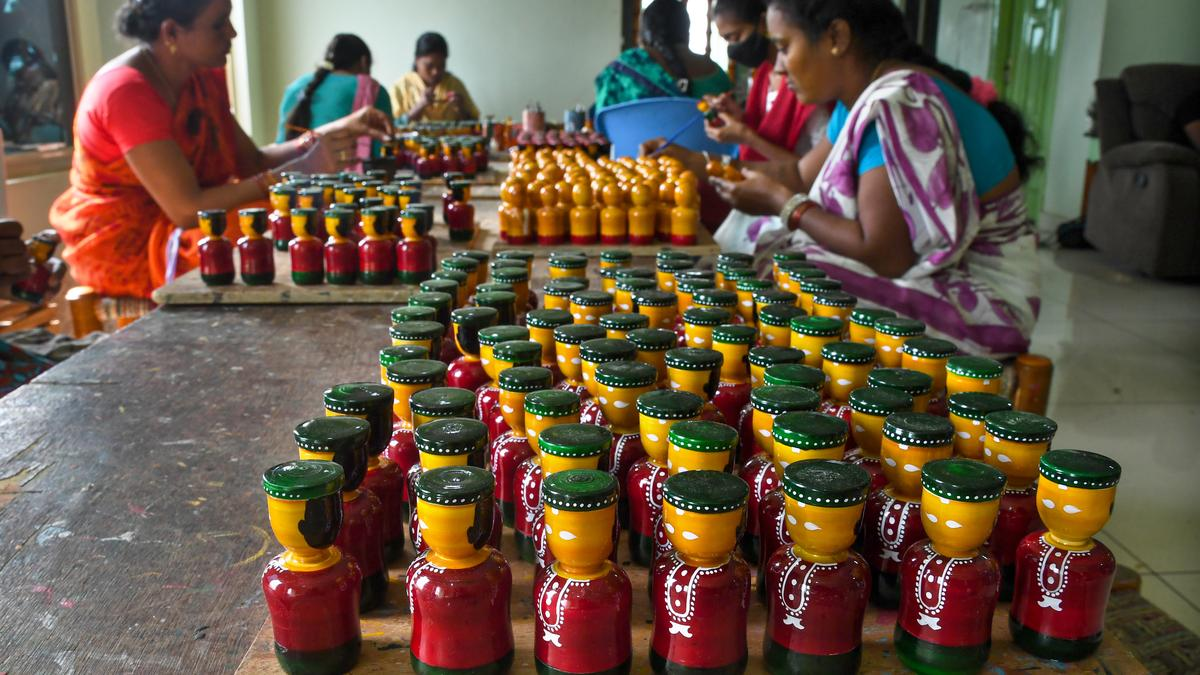
Six patient stages, one pair of hands. No production line, no shortcuts, only a lathe, a lacquer stick, and the slow turn of the wheel.

The Craft

Of dye, tool,
and patient wood.

Three quiet disciplines hold this craft together, the colour pulled from the earth, the chisel shaped by the artisan's own hand, and the long seasoning of the wood itself.

Natural lac dyes

Chapter one

Colour born from
seed and bark.

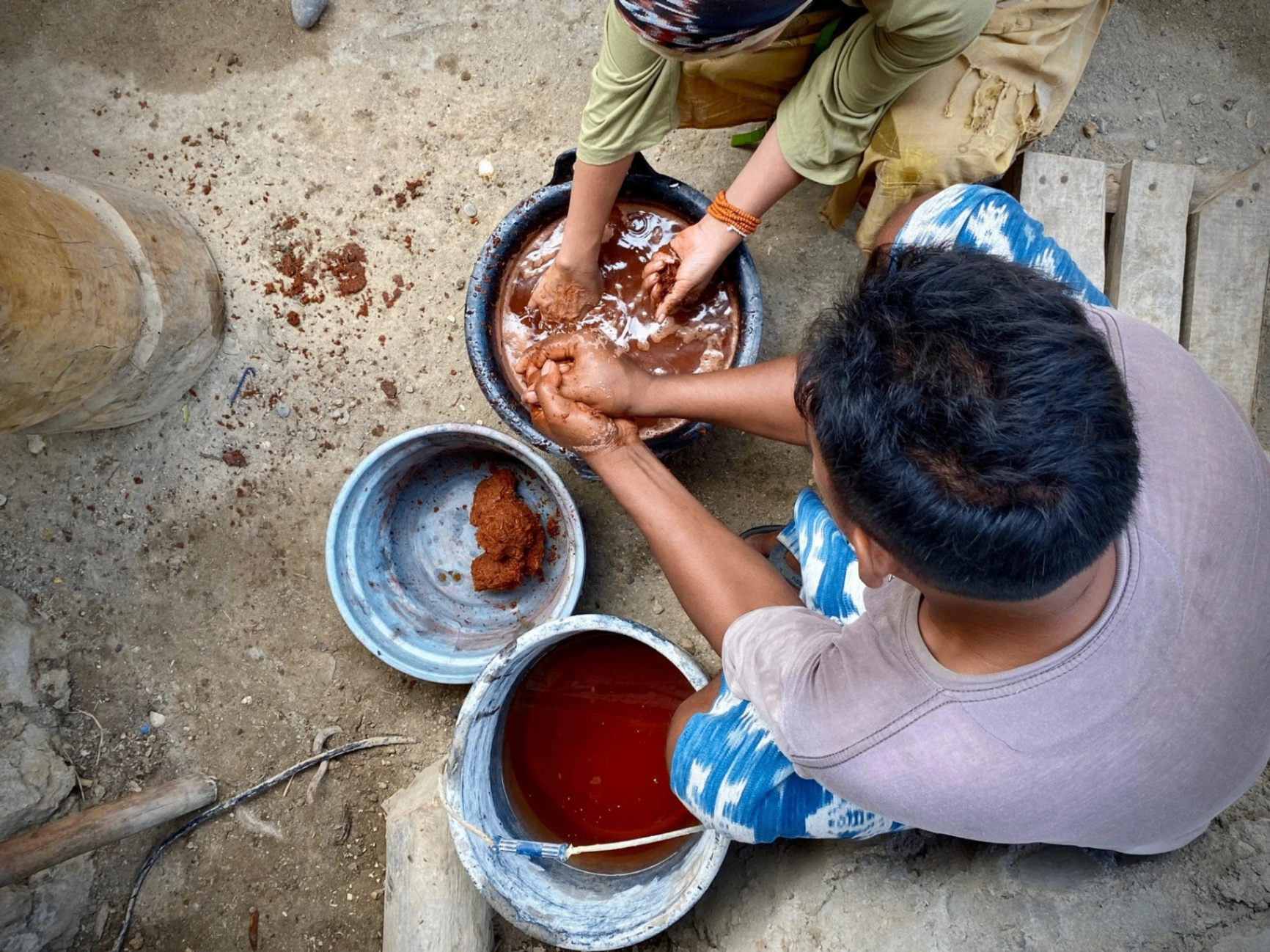
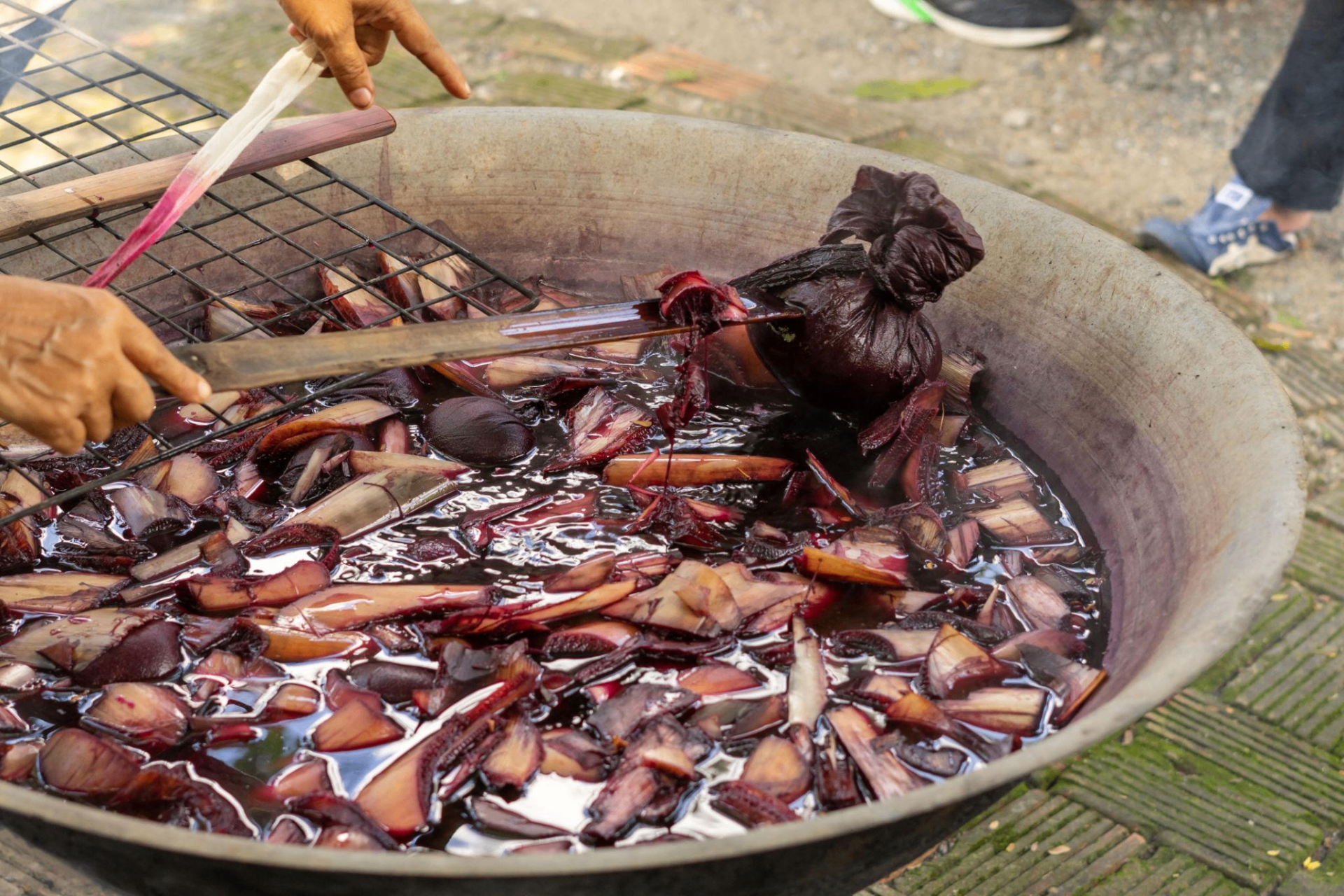
Natural dyes are carefully extracted from seeds, bark, roots, and leaves, then blended with lac through a slow oxidation process. The result is a colour that feels rich, warm, and beautifully alive.

It is this very lac dye, and nothing else, that gives every Etikoppaka toy its soft, timeless glow.
Artisan tools and hands

Chapter two

Tools the artisan
shapes by hand.

Measured sketches may guide the smaller forms, but much of the craft emerges from intuition, inspired by South Indian temple pillars, aged brass vessels, and the Barinis carried through memory.

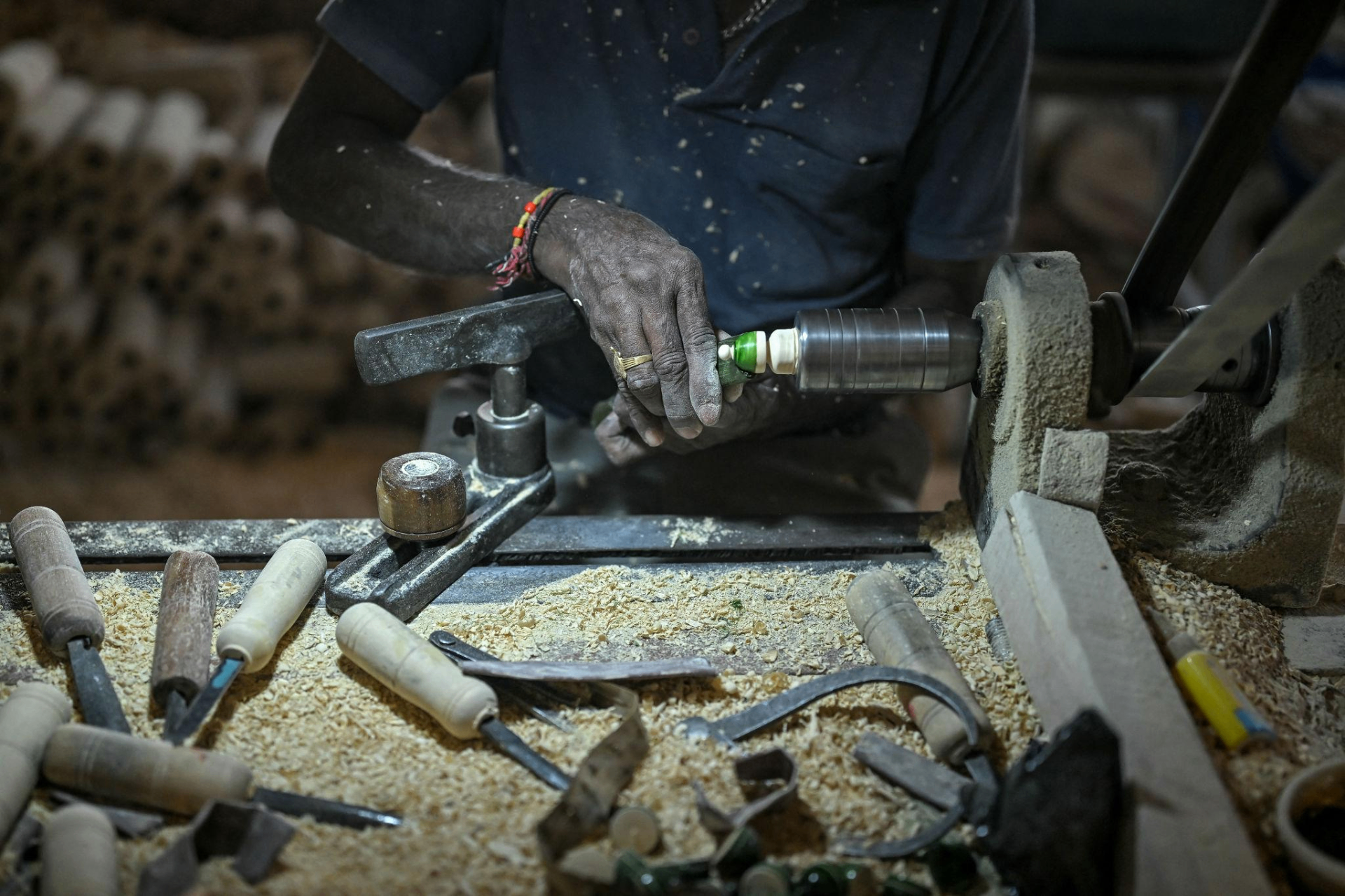
Each tool, Goruli, Monauli, Lovuli, and Hulli, is made for a distinct purpose: carving, hollowing, shaping, and refining. Every artisan carefully crafts and adapts these tools as an extension of his own hand.

Wood seasoning and turning

Chapter three

Six weeks of
waiting.

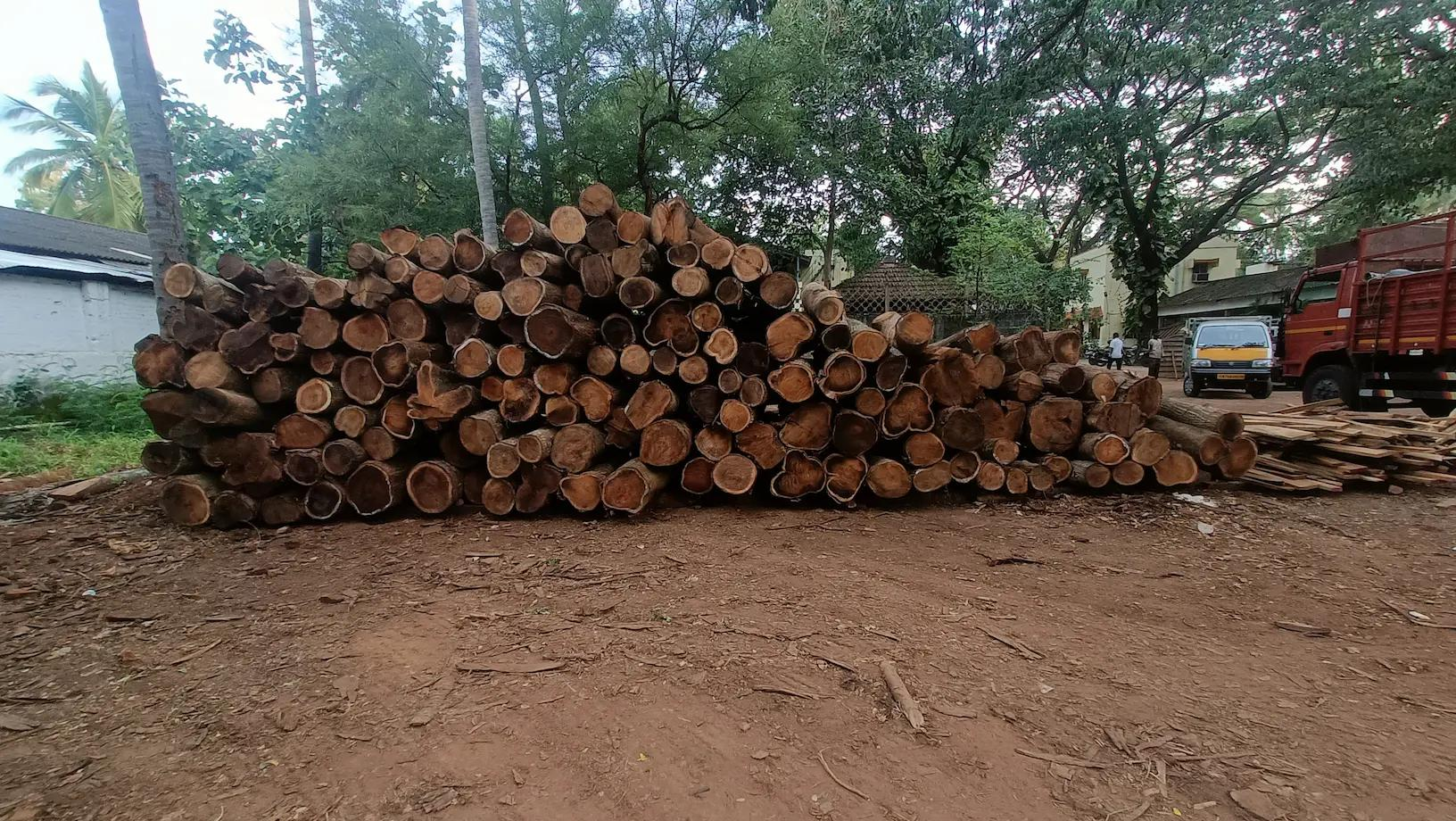
After harvesting, the wood is semi-finished and left to season for six weeks or longer, depending on the size of the piece. No more than two people ever work on a single product.

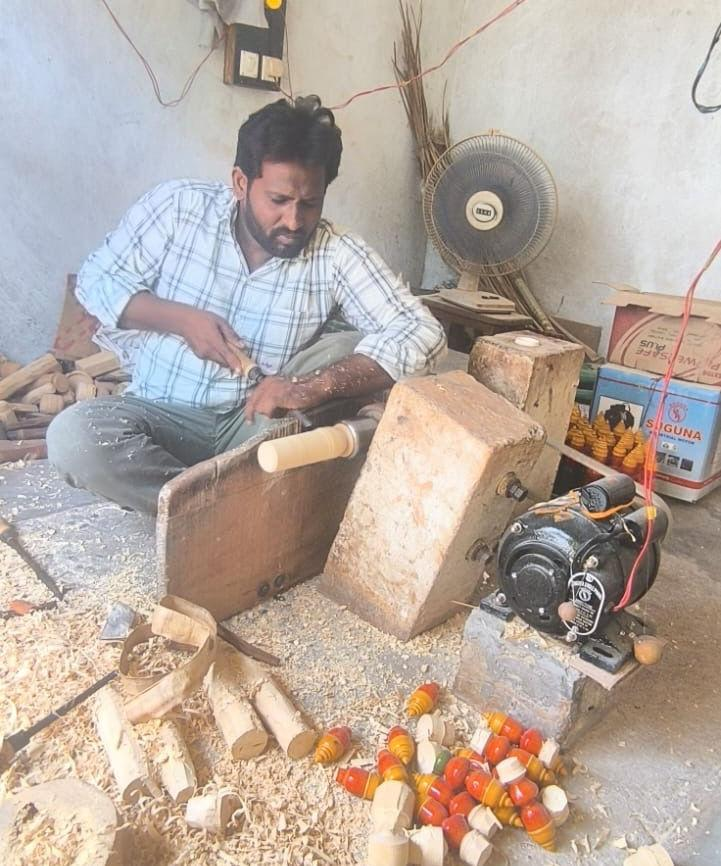
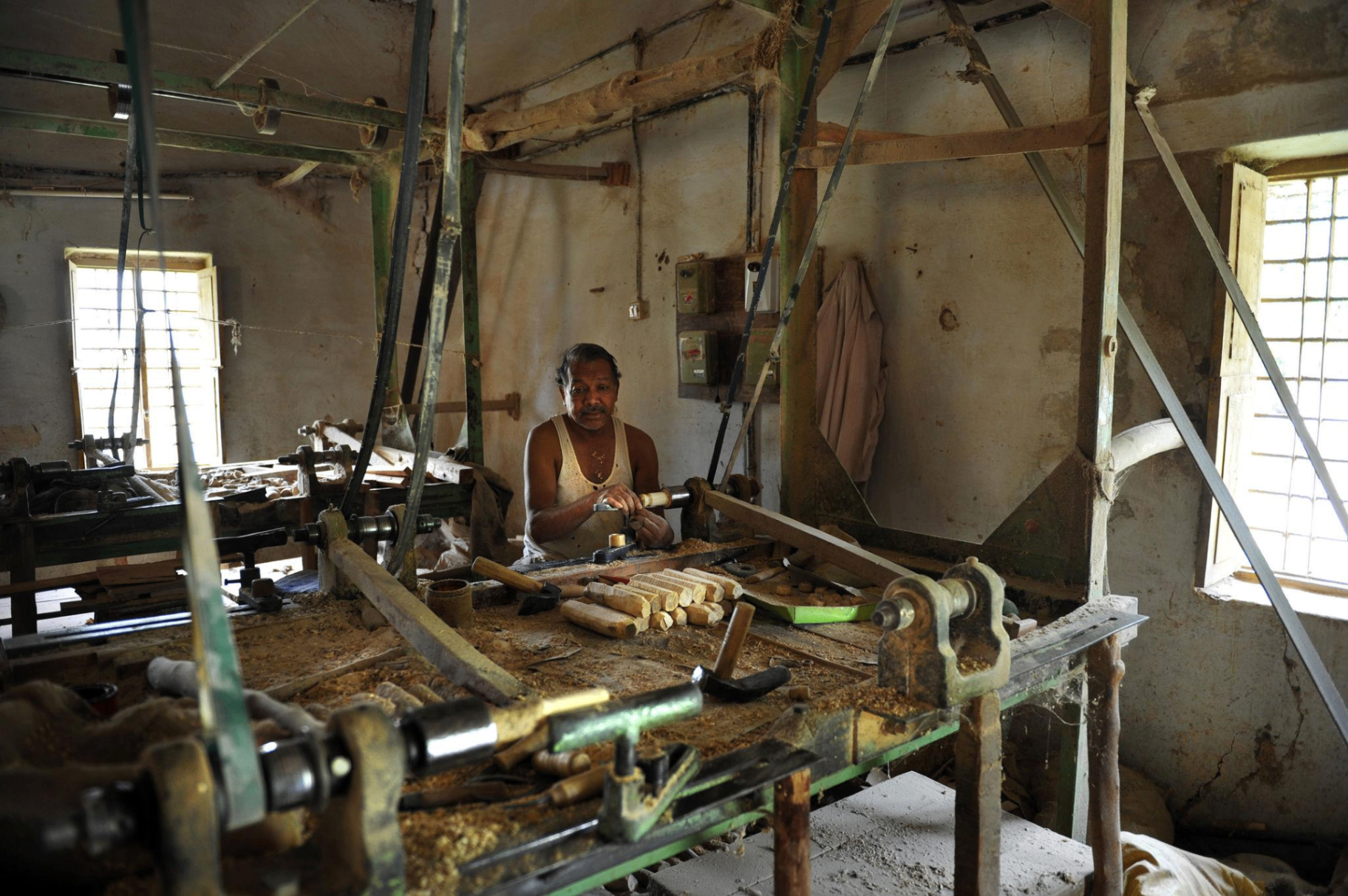
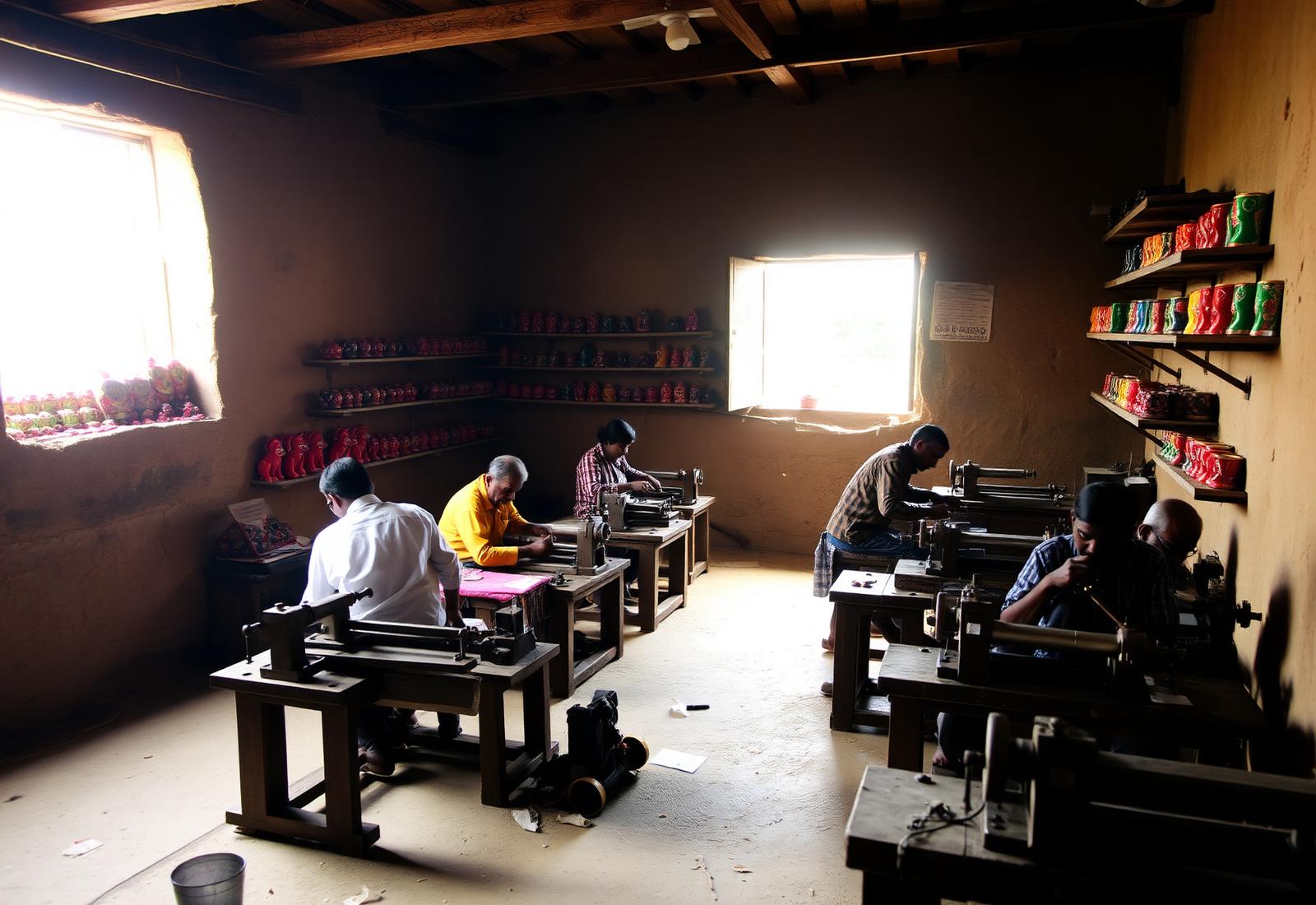
Each artisan family maintains its own workspace. Before 1975, every turn of the lathe and every chisel stroke was done entirely by hand. The arrival of the motorized lathe eased the physical strain, allowing artisans to focus on finer detailing and more creative forms.

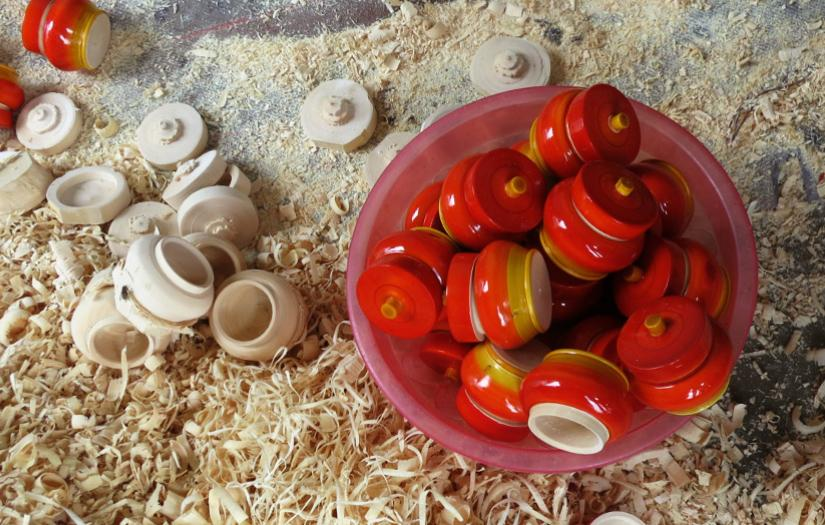
Nothing goes to waste. Wood shavings become cooking fuel, and when mixed with cow dung, neem, and sambarani, they are used to keep mosquitoes away. Even the smallest leftover fragment of wood is carefully shaped into tiny beads.

How is it made

Six steps,
one continuous rhythm.

Wood selection01

Step 01

Wood selection

Soft, fast-renewing ankudu wood is harvested from local trees. It is air-dried for months until ready to take a tool.

Carving & shaping02

Step 02

Carving & shaping

The wood is roughly cut to size, then handed to the artisan at the lathe, the heart of every Etikoppaka workshop.

Turning on the lathe03

Step 03

Turning on the lathe

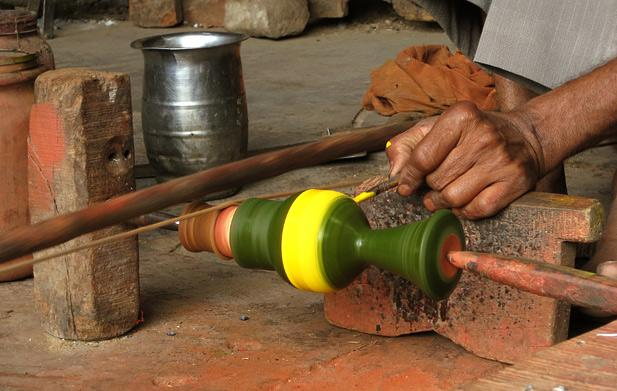
The piece is shaped by hand on a slow lathe, the form emerging in a single continuous gesture.

Natural dye preparation04

Step 04

Natural dye preparation

Pigments are pulled from seeds, lac resin, roots and bark, ground, sieved, and bound into the lacquer block.

Lacquer application05

Step 05

Lacquer application

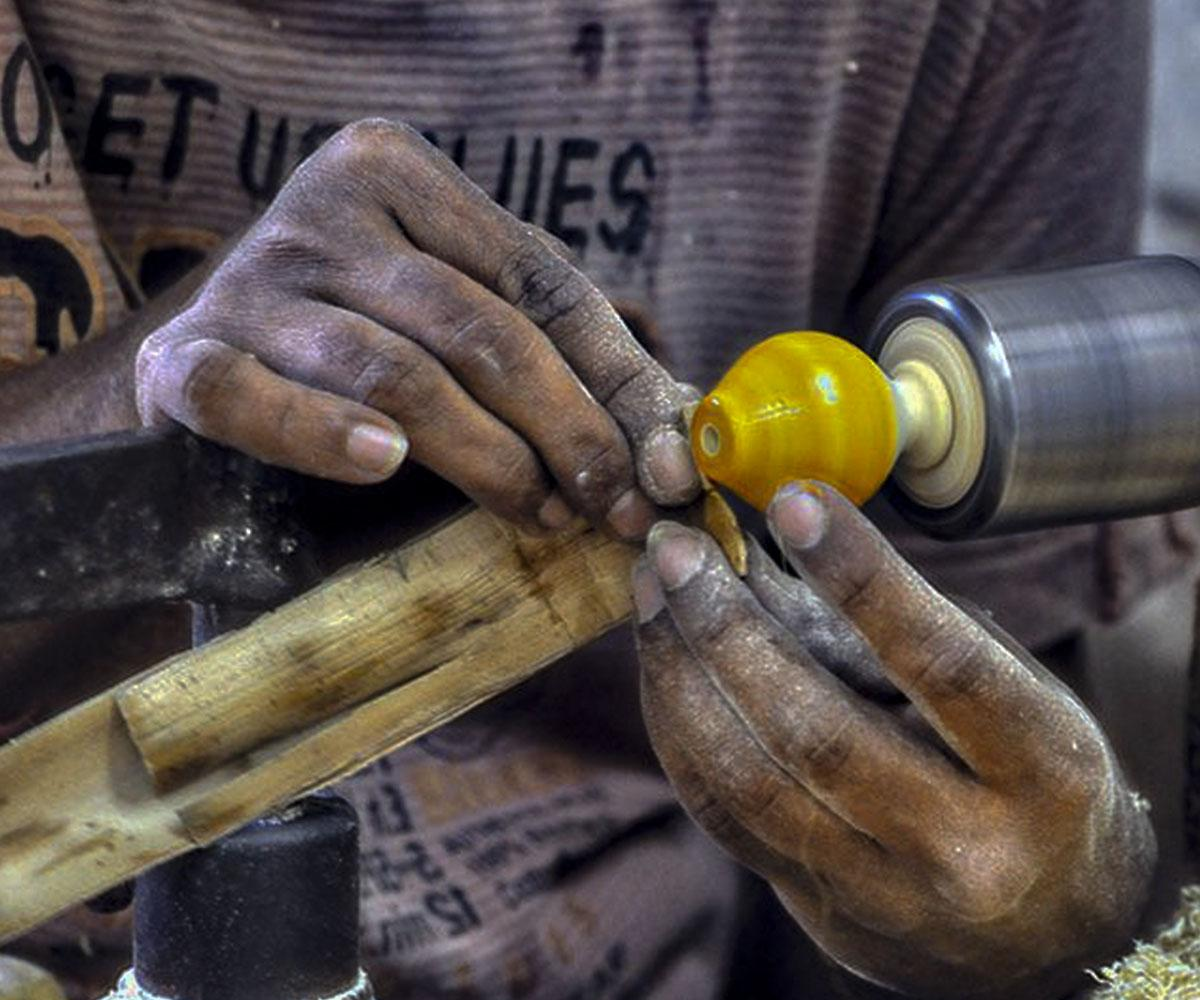
While the toy spins, the artisan presses a coloured lacquer stick against it. Friction melts the lacquer and bonds it to the wood. No fire, no chemistry.

Polishing & finishing06

Step 06

Polishing & finishing

A soft palmyra leaf is held to the spinning toy until the surface gleams. The toy leaves the lathe finished, nothing else is added.

Why Us

Safer than the
shelf next to it.

What's in a toy matters more than what's on the box. These are the small, deliberate choices behind every Etikoppaka piece.

  • Noplastic
  • Nomicroplastics
  • Nosynthetic paint
  • Nobatteries
  • Noscreens

Sensory learning

What the hands learn, the mind remembers.

The grain of turned wood, the warm weight of lacquer, the soft thunk of one toy meeting another, Etikoppaka toys give the senses something honest to hold on to. No screen can teach what skin can.

Safe materials

Nothing your child shouldn't hold.

Soft ankudu wood. Lac resin from trees. Pigments from seeds, roots, and bark. No PVC, no phthalates, no synthetic paints, no microplastics. Materials our great-grandparents would recognise.

Emotional development

Toys that wait to be played with.

Open-ended objects, a bird, a wheel, a ring, invite a child to bring the story. There are no batteries, no instructions, and no right answer. Imagination fills the quiet.

Motor skills

Small worlds, sized for small hands.

Stacking, rolling, threading, balancing. Each shape is turned to fit a developing grip, a lathe-finished smoothness that older children outgrow but never forget.

Sustainable childhood

Built to be passed from one child to the next.

An Etikoppaka toy is a hand-me-down, not a landfill statistic. Made from a fast-renewing wood, finished in natural lacquer, mended easily, and beautiful enough to keep on a shelf when play is done.

In closing

Earth, tool, time,
and a toy made for real hands.